Established foundation
Precision conservation and agricultural watershed science
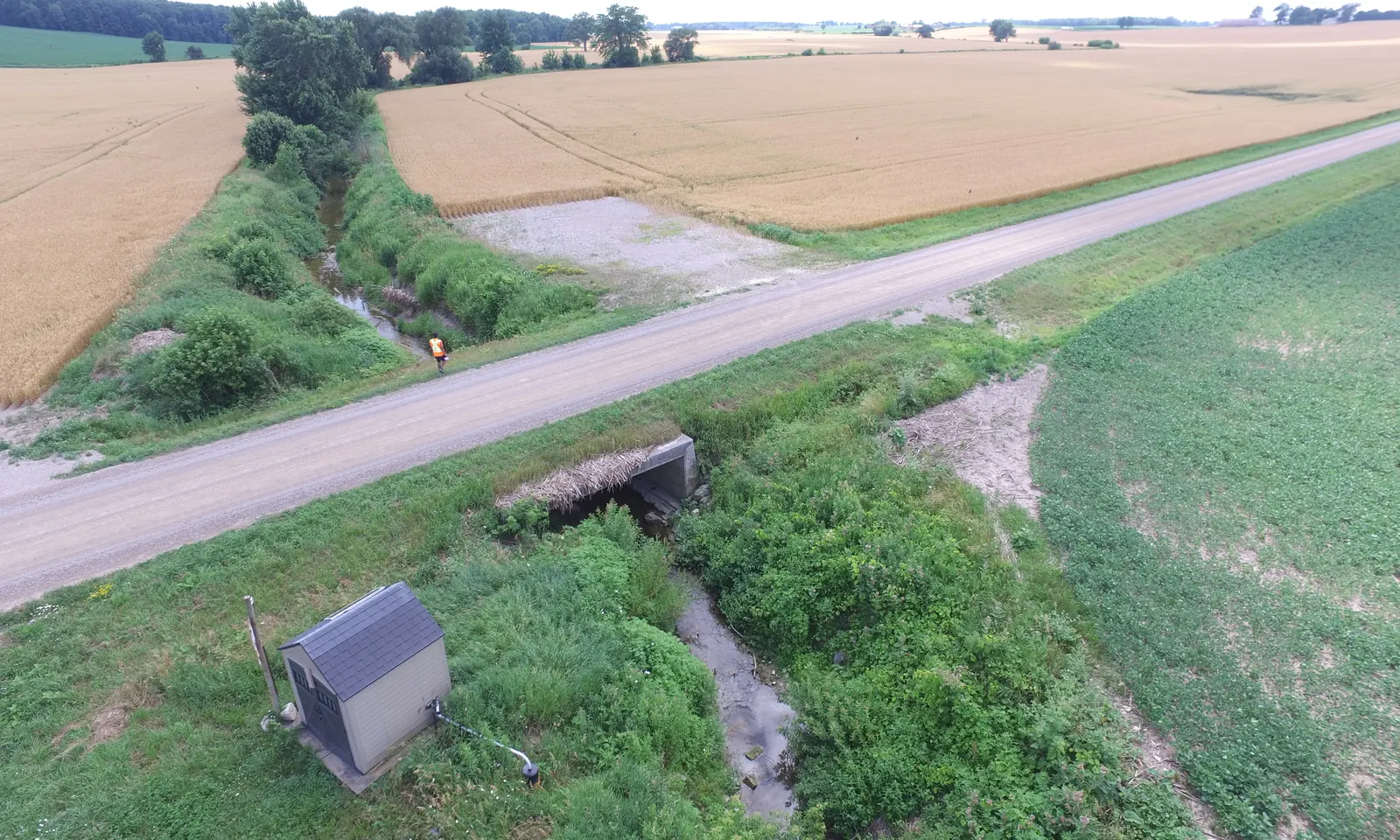
Nutrient transport, tile drainage, conservation-practice evaluation and field-scale targeting, informed by local priorities.
Postdoctoral Scholar · University of Guelph
Environmental and geospatial scientist
Department of Geography, Environment and Geomatics · University of Guelph, Ontario, Canada
Clean water, sustainable landscapes and resilient food systems depend on the same thing: good decisions about how land is managed. My research builds the evidence for those decisions.
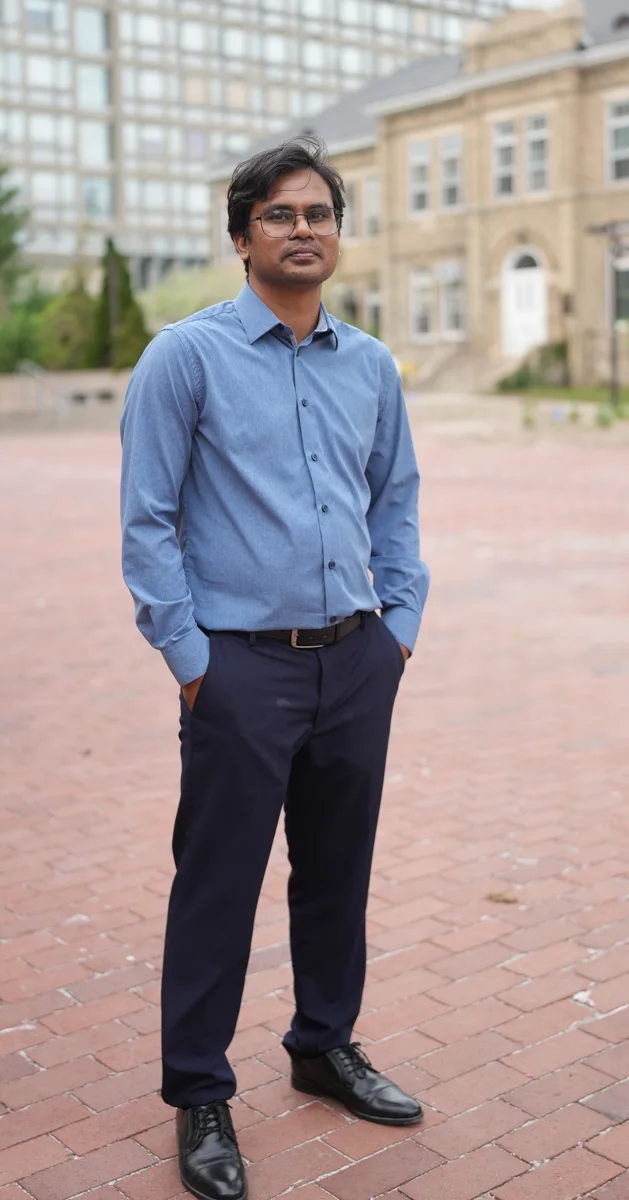
I am a geographer who builds watershed models, maps and machine-learning tools that show conservation agencies where limited budgets will do the most good. Before my PhD I spent six years designing and managing climate-adaptation programs in Bangladesh. That is why my science starts from a practical test: will this work on a real farm, for the people who have to carry it out?
The problem
Conservation practices such as cover crops, buffers and drainage-water management reduce those losses, but only when they are put in the right place.
What I do
I combine monitoring records, process-based watershed models and machine learning, then adjust the ranking with what local farmers and conservation staff know.
Why it matters
Agencies can direct stewardship budgets to the fields that count and explain that choice to the producers they work with.
Three connected pillars make up the program I am developing, the REAL Decision Lab. The first is established and published; the third is where the work is heading.
Established foundation
Nutrient transport, tile drainage, conservation-practice evaluation and field-scale targeting, informed by local priorities.
Established methods · emerging applications
Spatial analysis and machine learning are established parts of my work. Satellite observation and GeoAI are directions I am building.
Developing direction
Multi-benefit conservation, climate adaptation and decision tools that are updated as monitoring shows what worked.
I did not come to watershed modelling by the usual route. I trained as an environmental scientist, worked for six years where climate decisions are made and paid for, and then returned to research to build better evidence for those decisions.
First author
International Soil and Water Conservation Research · 2026
Contribution: Ranks field-specific conservation options by combining landscape suitability, feasibility and stakeholder-adjustable priorities.
Read paper / DOI →First author
International Soil and Water Conservation Research · 2026
Contribution: Predicts field-level conservation need and maps uncertainty to help planners prioritise intervention sites.
Read paper / DOI →First author
Science of The Total Environment · 2025
Contribution: Shows why conservation practice performance varies by site and supports combining practices across field and watershed scales.
Read paper / DOI →I led laboratories and supported assessment in undergraduate physical geography and GIS courses at Guelph. In the Winter 2024 GIS and Spatial Analysis evaluation, 13 of 14 respondents agreed that I presented material clearly. A summer research student I mentored in 2025 became a co-author of one of my 2026 papers.
Philosophy, courses and student feedback →Ontario Graduate Scholarship (2025–2026), Cecil H. Franklin Graduate Scholarship in Soil & Water Conservation (2025), and GEG Graduate Publication Awards (2024, 2025).
All awards →Journal peer reviewer; graduate-student member of a University of Guelph faculty search committee (2023); earlier program leadership at BRAC and ICCCAD in Bangladesh.
Professional experience →Public writing · The Conversation
Our article on how field evidence, watershed modelling and local knowledge can guide conservation planning to reduce nutrient losses and protect Lake Erie.
Public writing · Development and Cooperation
My article on protecting livelihoods and addressing salinisation between cyclones in Bangladesh.
Research story · University of Guelph
A reflection on my doctoral research connecting watershed science, precision conservation, and local knowledge.
I am glad to talk about research collaboration, graduate research, teaching and applied environmental projects, and to share my teaching dossier with search committees.
Get in touchCollaboration interests →Google Scholar ↗